Wednesday, July 21, 2010

A new definition of leadership


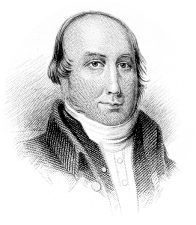
One of my heroes is William Clowes, the Apostle Paul of the Primitive Methodist movement. He brought the life changing message of Christ to many thousands of working class men and women, preaching in the outdoors. He knew that the secret of connecting with people is first connecting with God. Then, and only then, could he communicate to those around him. He defined leadership like this:

"leading was not so much a matter of talking to the people as ‘getting into faith and bringing down the cloud of God’s glory.’"

He knew that like Moses, he had to bring God's glory to the people. Clowes epitaph in 1851 records that "he was a burning and shining light". He reflected the glory of God to those whom he reached with the gospel. He knew how to bring the glory down.

How about you and me?

Tuesday, July 20, 2010

The story of Willie Wilkinson, the Duke of Cleveland and the agent

(or the butler is more fierce than the king)

(or how the Primitive Methodists obtained a site for a chapel)

Occasionally it happened that the difficulty in obtaining a site for a Primitive Methodist chapel was due to the intolerance of an agent, and when the applicants managed to get past the underling to the great man himself, all troubles ceased.

This story is from Bowlees, near Middleton-in-Teesdale, in the north east of England.

All requests to the owner of the desired land, the Duke of Cleveland, had been fruitless. After much prayer, a sturdy Yorkshireman, Willie Wilkinson, resolved to present his plea personally to the landlord, shrewdly suspecting that as yet his Grace knew nothing of the matter. The Duke was staying with a shooting party at High Force Inn, and Willie Wilkinson was, of course, refused admission. Brushing past the Duke’s servant, Willie made his way to the Duke, and began the interview by grasping his Grace’s hand, with the inquiry:

‘How are ye Mister Duke, an’ how’s Missis Duke?’

Happily the Duke was not without a sense of humour, and took in the situation, so that Willie was asked to state his business.

“Ah want a bit o’ground, Mister Duke, to build a Primitive Methodist chapel on. An’ it’s not the first time we’ve asked for it neither, Mister Duke. Ah’ve sent paper after paper myself, an’ never gotten any word back.’

The agent admitted the truth of the statement, excusing himself on the ground that he had never deemed it of sufficient importance to lay before his Grace.

Willie could contain himself no longer. ‘Ah always thought that was t’way it was. Ah’ve never spoken to ye in my life before, but ah was sure ye were a decent sort of a man. Ah always thought it was them nasty bodies about ye.’

Willie intimated further that if they could get a few poachers converted in the new chapel, his Grace would be ‘obliged’ to them.

‘You shall have a piece of land, most certainly, my man,’ said the Duke.

‘Thank ye, Mister Duke,’ was Willie’s prompt response.

‘Where would you like to have it?’

‘Mister Duke,’ replied Willie, in his most insinuating manner, ‘there’s a bit o’ ground down yonder in the corner of the pasture, it grows nowt, it never growed nowt, it grows nowt but weeds, but it’ll do very well for a chapel.’

The Duke promptly granted the site, and at once instructed his agent to meet Willie at nine o’clock next morning to stake out as much land as Willie desired. Willie was on the spot in good time, with a bundle of stakes ready for staking out. Then the steward arrived.

“Thou’s come then,’ was Willie’s caustic greeting. ‘Ah thought thou would come. Thou didn’t dare but come when t’ Duke tells thee. But ah have thee now. Does thou see them stakes? Thou’ll put them in just where ah tell thee. T’ Duke said ah was to have as much ground as ah wanted.’

Meekly the agent followed Willie from point to point, until an ample site had been staked out, and Bowlees chapel stands today a monument of the sturdy Yorkshireman’s ‘holy boldness’.

Abridged from The Romance of Primitive Methodism, Joseph Ritson, pp. 133 -134.

Tuesday, July 13, 2010

Liberal theology is alive and well

The seeds for decline of the Primitive Methodism movement were sown by the acceptance of Protestant Liberal theology, and the Social gospel. The Bible was open to reinterpretation, and the stories of miracles and supernatural events in the gospels were dismissed as myth. Within a hundred years core beliefs of the founders of the movement were gradually overturned.

The problems of liberal interpretation of the Bible are ever present. Steve Addison writes about liberal Biblical interpretation in the Baptist Union of Victoria.
There is nothing more important to the vitality of a movement than it’s commitment to its core beliefs. Dynamic movements hold both orthodoxy (core beliefs) and engagement with the culture in creative tension.

About a year ago my denomination (Baptist Union of Victoria) reappointed its New Testament professor, Dr Keith Dyer. The appointment was supported by the denominational leadership and theological college and affirmed by a two-thirds majority of a BUV Assembly of ministers and church representatives.

Historically, the BUV has been an evangelical denomination with a conservative statement of faith that upholds the supremacy of scripture.

For more on this post see a Case Study in Decline. This time the debate is about a Biblical approach to homosexuality. So another hundred years later, it would seem that little has changed. Liberal Biblical interpretation is alive and well.

Tuesday, May 25, 2010

On getting to heaven ...

Here is an extract from a sermon preached by Hugh Bourne to children. I have preserved the old dialect words (like ‘childer’ for ‘children’).

Now, my dear childer, when you get to heaven, you’ll all be clothed with fine robes; (you know what robes are my childer- they are long garments, trailing on the ground, which kings and queens wear). And you’ll have a crown on your head, finer and grander than Queen Victoria’s; and when your daddies and mammies see you they’ll scarcely know you. They’ll say – ‘Hay! is yon our Mary or our Tommy? Why, they look as nice as nice and as grand as grand.’ And there’s tree o’life in heaven and nicer tasted fruit than it grows never was – it’s nicer and sweeter than sugar: and there’s t’river of water of life, too, clear as crystal: nicer and better tasted water never was. And you’ll have no more sore eyes nor aches and pains, nor sickness of any sort there – so you must all strive to get there. When you get to heaven, my childer, you will, after a while, see this old world burning up … and you’ll say – ‘There goes t’old world on which we sinned so much and suffered so much and in which old Satin tempted us so much’; but after all, you’ll say ‘it sarved our purpose very well’, for we heard of Jesus on it, said our prayers on it, and lived to God on it, and got to Heaven from off it, so we have no fault to find with it.

See also
Eternal Consequences

Heaven and hell: an inconvenient truth?

Quote from "A Little Primitive", by Kenneth Lysons, p. 36

Monday, May 24, 2010

Eternal consequences

For the Primitive Methodist pioneers Hell and Heaven were eternal realities. Here is an extract from a hymn by Hugh Bourne:

His vengeance will my soul pursue
If I refuse His grace.
And ah! – alas what must I do
If banished from His face.
Eternal darkness I must see
And hope will never come,
But fiends will my companions be
And Hell will be my home.

These words are blunt and confronting! Our modern methods of evangelism tend not to mention the wrath of God, or the coming judgment. We are happy to talk of the love of God, whilst preaching a soft line on his justice, and wrath (that is, His righteous anger). The apostle Paul puts it like this “But for those who are self-seeking and who reject the truth and follow evil, there will be wrath and anger.” (Romans 2:8)

See also
“On getting to Heaven” in the next post …
Heaven and hell: an inconvenient truth?

Wednesday, May 19, 2010

Take care of the children

In 1824, Hugh Bourne, and his brother James began the publication of a Children's Magazine. Demand exceeded initial expectations and so another print run was organised. The Magazine proved to be a great success.

Ministry to children was a lifelong passion of Hugh Bourne. His rallying cry was “Take care of the children”. He was tireless in promoting the importance of the work amongst children. As late as 1843, when he was in his early 70s, he published “The Early Trumpet: A Treatise on Preaching to Children.”

In the following decades, the number of children in Primitive Methodist Sunday Schools grew substantially, and was a major emphasis of the movement. By 1852 there were 118,000 Sunday School children in 1,400 Sunday Schools, led by 22,000 teachers. By the time of the centenary in 1907 there were 477,000 children, 4,200 Sunday schools and 61,000 teachers.

Tuesday, May 18, 2010

Ministry to children

Many of the children in Primitive Methodist Sunday Schools were illiterate. They were taught Bible stories and how to read and write. The following piece “On the small letters”, appeared in the Children’s Magazine in 1835:

Two feet, one head, and score across,
In letter A we see
And one stroke down, and two half-rounds
Complete the letter B.
The letter Y stands quite upright,
And shows its open head,
And one slant stroke, with head and foot,
Completes the letter Z.
The Lord our God on Sinai,
Did write for us we know;
Letters he gave, and written laws,
That we to heaven might go

‘On the small letters’, Primitive Methodist Children’s Magazine, 1835, pp.60-61 quoted in Primitive Methodism, G. Milburn, p.51